Drain Jetting Shortland
Drain jetting in Shortland uses a hose of pressurised water to scrub sewers and stormwater pipes back to bare wall, taking out fat, sand and fine roots along with the clog itself. The price is settled before the hose goes in, and the camera films the pipe once it runs.
Jetting is part of the drain work our plumber in Shortland team handles, with the rest grouped on the blocked drains page.
Licensed plumbers and gas fitters · NSW Lic. 359278C
Last updated October 2026
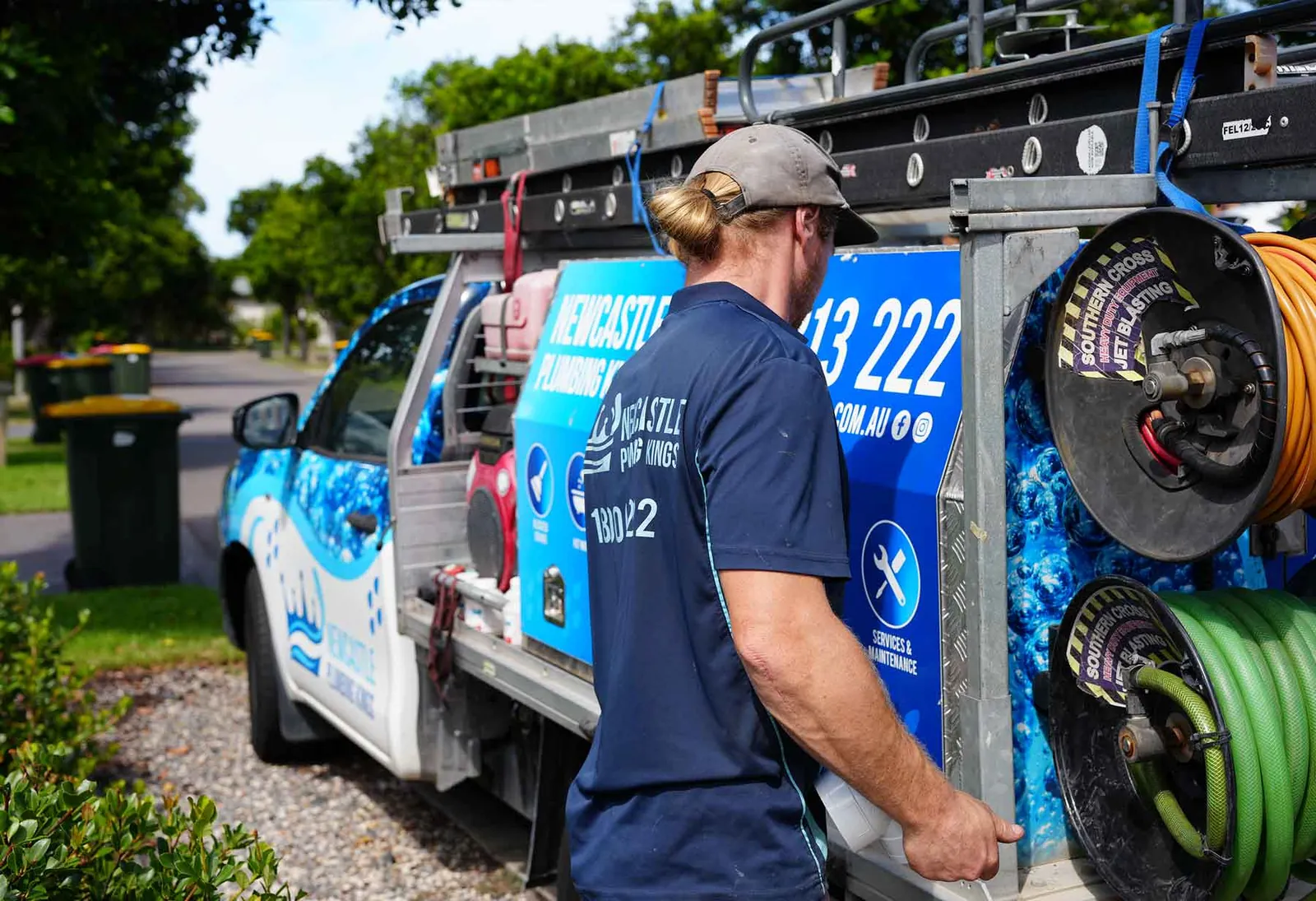
What the Jetter Does That an Eel Doesn't
An electric eel bores a narrow path through the clog. The water drains, yet the fat or silt behind the problem stays stuck to the pipe. A jetter scrubs the full circumference instead.
- Kitchen fat coating the pipe is broken off and washed down to the main.
- Sand and soil carried into stormwater pipes by runoff are pushed right out of the line.
- Root hairs inside a joint are trimmed back flush with the pipe wall.
- Paper and sludge break apart and travel out with the water.
A jetter hose can also follow a line around bends and well past the point where a cable stalls.
Why Do Floodplain Drains Need a Jet?
Water barely moves through floodplain soil. Shortland is flat alluvial country beside the estuary, with reactive clay mixed through it.
- The high water table keeps buried pipes sitting in wet ground, and that ground moves the joints of the old earthenware sewers until they open.
- Trees in established yards follow the moisture to those open joints and send roots inside.
- Runs with almost no fall let solids drop out and stay, rather than washing through.
- When a storm surcharges the system, the line already half full of silt is the one that spills.
How We Jet a Line
- 01
Ring or send the form
Call (02) 4063 1093 or use the form to explain the fault. We ask enough to bring the right equipment the first time.
- 02
A fixed price first
A plumber inspects the job and names a fixed figure up front. Nothing gets started until you give the go-ahead.
- 03
Passes, then pictures
The hose goes in at the closest opening and works the pipe in passes, with the pressure dialled to the pipe type, and then the camera checks the result.
- 04
Covered for a year
Every job carries our 365-day warranty on all work. If something we did isn't right, ring the same number.
What Sets the Cost of Jetting?
We provide up-front, honest quotes that will always match the final price, should you decide to go ahead.
Where the line can be reached sets the starting point. An inspection opening in the yard is a quick hook-up; a pipe that can only be reached from under a low-set floor is not.
The price also reflects:
- What is in the pipe As fat washes out faster than a mat of roots
- How long the run is Since more metres mean more passes
- Night or weekend timing Which falls under after-hours rates
When Does the Camera Join the Job?
You cannot film a pipe that is full, so the jetter goes first and the camera follows. On a drain that keeps choking, the footage shows whether the blockage or the pipe itself is to blame. Roots growing back lead to tree root removal, and a cracked or sunken section gets priced as pipe relining.
When we're not the right call: if a single pass clears the drain and the pipe looks sound on camera, relining is not needed and you will not be quoted for it. Should the blockage sit in the shared main, Hunter Water clear that section after you report it.
Damp Soil, Flat Runs and Old Sewers
Pipes from the Housing Commission years
No slope to help
What Customers Say
We talked through the options of our blocked kitchen sink drain (not just an s bend problem) and came to the perfect long term solution at a reasonable price.
Questions People Ask About the Jetter
Is jetting safe for the old clay sewers under these homes?
Yes, with the right nozzle and pressure. Old earthenware with mortar collars is run at lower pressure than modern PVC, which cleans the wall while leaving the joints alone. A section that is already broken is not blasted through; it gets priced as a repair or a reline instead.
Do you use chemicals as well as the water?
No. The jetter runs on water alone. Nothing caustic is left behind in a slow-draining pipe or soaking into the damp floodplain soil next to the Hunter Estuary Wetlands.
How long does a jetting visit take?
It comes down to the blockage. A greasy kitchen line can be clear and flowing in one short session, while a sewer packed with roots needs several passes and a camera run to finish, and the plumber explains which you have before starting.
Will the drain block again after jetting?
Not if the pipe is whole. Roots that came in through a split joint can grow back, and the camera footage tells you whether relining makes more sense than jetting again. Either way you see the pictures and choose.
Need a plumber? Call or send the form
Call (02) 4063 1093 or send the form below. Available 24/7, you see a fixed figure ahead of any work, and every job carries our 365-day warranty on all work.
Request a callback
Leave a name and number and a plumber will ring you back.